Prompts for AI ad copy: structure, examples and common mistakes
How to ask ChatGPT, Claude or Gemini for ad copy that works: a 6-block structure based on official guides, a full example and the mistakes that make everything sound the same.

By Rubén García · October 6, 2026 · 3 min
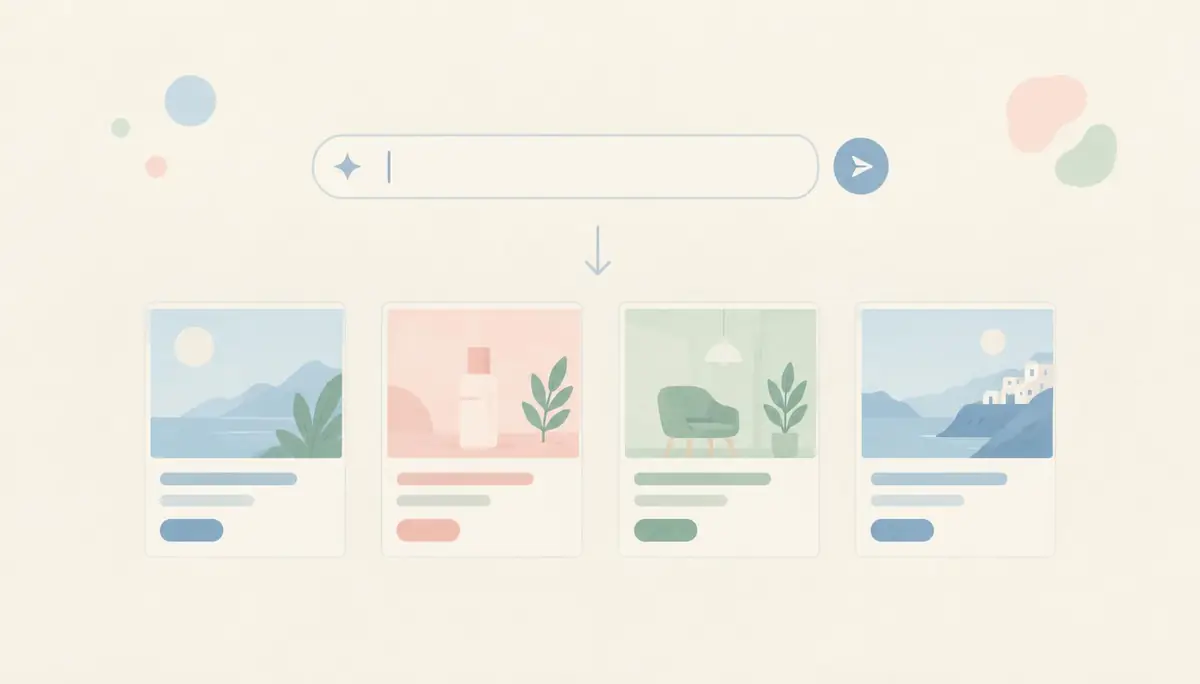
A prompt is the instruction you give an AI model. For ad copy, output quality depends almost entirely on the information you provide: a generic prompt gives a generic ad. Official guides from OpenAI, Anthropic and Google agree on three principles: be clear and specific, give examples and ask for a concrete output format.
The 6-block structure

- Role: "Act as a direct-response copywriter for Instagram ads".
- Product: what it is, for whom, main benefit and proof (data, review, guarantee).
- Audience: who they are, their problem, the words they use, their objections.
- Goal: the action we want (signup, purchase, download) and the funnel stage.
- Format: number of variants, max length, parts (hook, body, call to action).
- Constraints: brand tone, banned words, no figures that aren't in the prompt.
Full example
Why ask for many variants
Your take, in one click
How many copy variants do you test per campaign?
Automated campaigns such as Advantage+ and Performance Max combine copy and images and prioritize what works. The more distinct angles you give them, the more room they have to find the right message for each person. Asking for ten variants with explicit angles stops AI returning ten versions of the same text.
6
blocks in a complete copy prompt
10+
variants recommended per test
1
distinct angle per variant
Angles worth asking for
- Direct benefit: what the customer gets.
- Pain: which problem goes away.
- Social proof: reviews, customer count.
- Objection: answer the main doubt.
- Comparison: before and after.
- Real urgency: only if it exists (offer end, limited spots).
Common mistakes
- One-line prompt ("write an ad for my app"): generic output.
- No real data: AI invents it, which can be misleading advertising.
- Asking for a single version and accepting it.
- Not defining tone: everything sounds like a template full of exclamation marks.
- Not reviewing: factual errors, impossible promises or platform-banned words.
From copy to the full ad
With the text ready, the next step is the visual. For video, see the AI video tools comparison and, if you use virtual presenters, the UGC avatar guide.
Frequently asked questions
What is the best prompt to write ads?
One that includes role, product with real data, audience, goal, output format and tone constraints. The more specific context, the better the result.
Which AI writes the best ad copy?
ChatGPT, Claude and Gemini give similar results with a good prompt. Context quality and human review make the difference.
Can I use AI-generated figures in ads?
Not without verifying them. Figures must be real and provable; if AI invents them, the ad may be considered misleading.