
What is AARRR: definition, example and how to apply it
What is AARRR, Dave McClure's 5-stage funnel: acquisition, activation, retention, referral and revenue. With an example, a 1-page template and how to find where you lose customers.

By Rubén García · October 27, 2026 · 5 min

AARRR is a 5-stage framework to find where you lose customers: acquisition, activation, retention, referral and revenue. Investor Dave McClure introduced it in 2007. Most businesses put their money into the first stage, getting more visits. But according to Harvard Business Review, losing 5% fewer customers can raise profits by 25% to 85%.
5
stages in the AARRR framework: acquisition, activation, retention, referral and revenue (Dave McClure)
2007
year Dave McClure introduced ‘Startup Metrics for Pirates’
25–85%
higher profits from losing 5% fewer customers, depending on the industry (Harvard Business Review, 1990)
What is AARRR and where does the name come from?
AARRR stands for five stages: Acquisition, Activation, Retention, Referral and Revenue. Read aloud, it sounds like a pirate's cry, which is why they're also called ‘pirate metrics’. Each stage is something the customer does, not something your company does.
- Acquisition: how do people find you? For example, from Google, social media or ads.
- Activation: do they have a good first experience? For example, they sign up and try the main feature.
- Retention: do they come back? For example, they buy again or use the app the following week.
- Referral: do they recommend you? For example, they invite a friend or leave a review.
- Revenue: do they pay? For example, they buy, subscribe or upgrade.
What it means: AARRR makes you look at the whole journey, not just visits. Why it matters: if people come in and never return, more traffic is like filling a leaky bucket.
Rule of thumb: fix the bucket before pouring in more water.
What is AARRR useful for in a small business?
It helps you find the bottleneck: the stage where most people drop off. For example, if 1,000 people visit your site and only 10 sign up, the problem is activation, not acquisition.
What to do: put a number on each stage using the data you already have. Google Analytics, your online store or your email tool is enough to start. Why: without numbers, everyone on the team thinks the problem is in their area.
Rule of thumb: the biggest drop between two stages is this month's priority.
Which metrics should I use at each stage?
Pick one metric per stage that you can measure every week. Here's a suggestion for an online store (editorial recommendation):
- Acquisition: new visits by channel.
- Activation: share of visits that add to cart or sign up.
- Retention: retention rate, i.e. the share of customers who buy again within 90 days.
- Referral: new reviews or invitations sent per month.
- Revenue: average order value and total monthly sales.
What it means: for an app or software the metrics change, but the logic doesn't. If you already track growth, compare it with our growth metrics and their benchmarks.
Rule of thumb: if a metric doesn't make you change anything, swap it for another.
Source: Reichheld and Sasser, Harvard Business Review (1990).
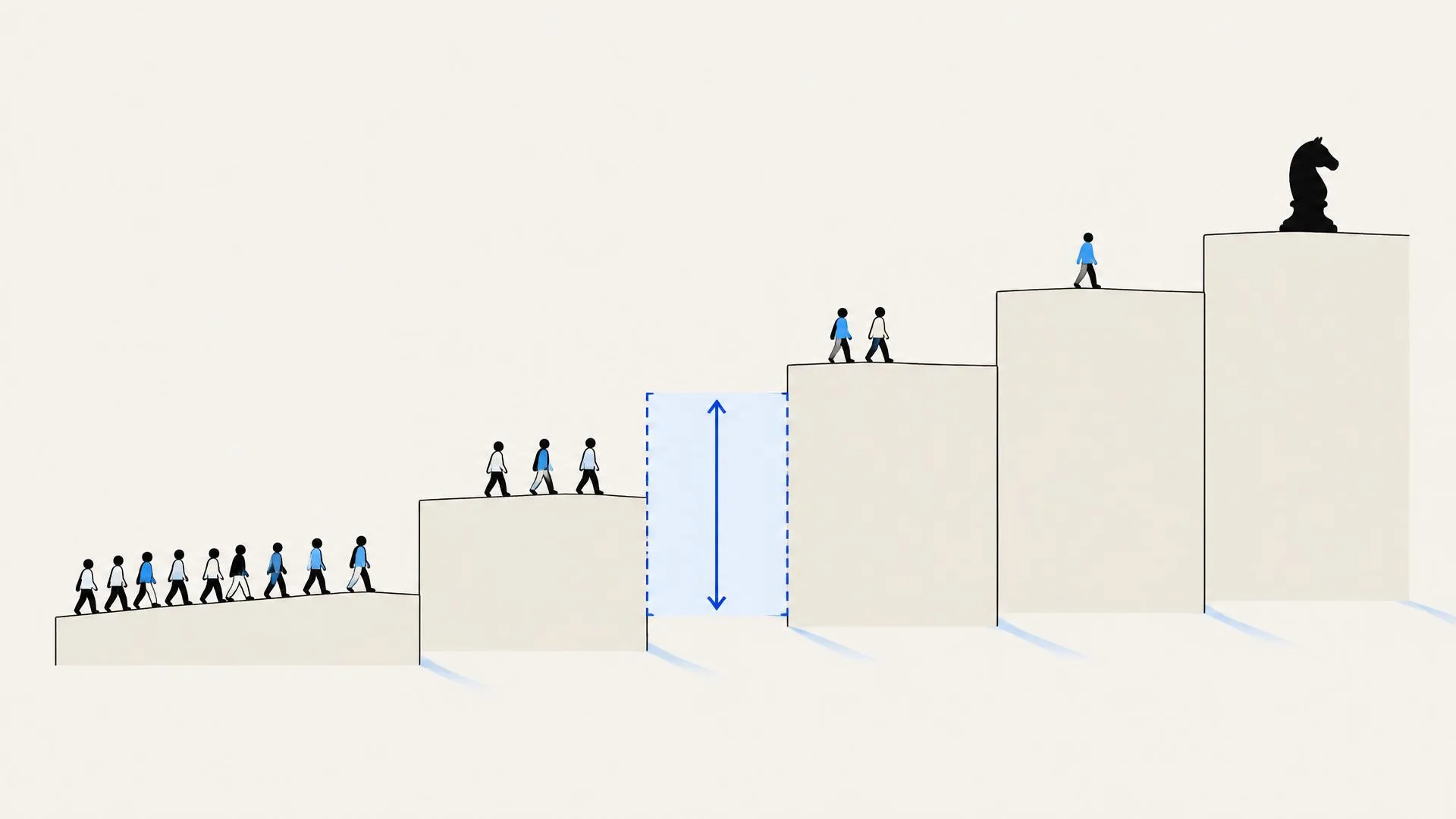
The Garcai method: your 1-page AARRR template
You need one hour and a spreadsheet. You can ask ChatGPT or Gemini to help organise the data.
- Make a table with 5 rows, one per stage, and 3 columns: question, metric and last month's number.
- Fill in the questions from the list above and pick a single metric per stage.
- Pull last month's numbers from Google Analytics, your store and your email tool.
- Work out what share of people move from one stage to the next. Mark the biggest drop.
- Write 3 ideas to improve only that stage and test one for 2 weeks.
- Redo the table every month. When the bottleneck moves to another stage, change your priority too.
You can do it yourself: all six steps, with the data you already have in your tools.
Ask your tech team, or whoever runs your website, if you can't see some data. Ready-to-send message: ‘Could you send me last month's new visits by channel, sign-ups, repeat customers and sales? I want to build an AARRR table.’
Common mistakes
- Measuring only visits and followers: that's the first stage, not the whole journey.
- Tracking five metrics per stage: with that many, nobody knows which to watch.
- Fixing every stage at once instead of the one losing the most customers.
- Copying a software startup's metrics when you run a shop or a local service.
- Forgetting referral: happy customers bring others, as in automated growth loops.
AARRR isn't theory: it's a table that tells you where to look this month. See how it fits with other growth strategies. And how companies whose product sells itself use it, in AI product-led growth. And remember: fix the bucket before pouring in more water.
Frequently asked questions
What does AARRR stand for?
Acquisition, activation, retention, referral and revenue. They're called pirate metrics because, read aloud, they sound like a pirate's cry.
Who created the AARRR model?
Investor Dave McClure, in his 2007 talk ‘Startup Metrics for Pirates’.
Does AARRR work for a business that isn't a startup?
Yes. It works for an online store, a school or a local service, because it only needs to know where people drop off.
What's the difference between AARRR and a growth loop?
AARRR is a funnel with stages in a line. In a growth loop, the output of one cycle feeds the next, for example when a customer brings in another.