What is a growth loop: definition, 4 types, real examples and how to automate it with AI
Dropbox grew 3,900% in 15 months with a single referral loop. What a growth loop is, how it differs from the funnel and how to use AI to speed up each cycle.

By Rubén García · October 8, 2026 · 3 min
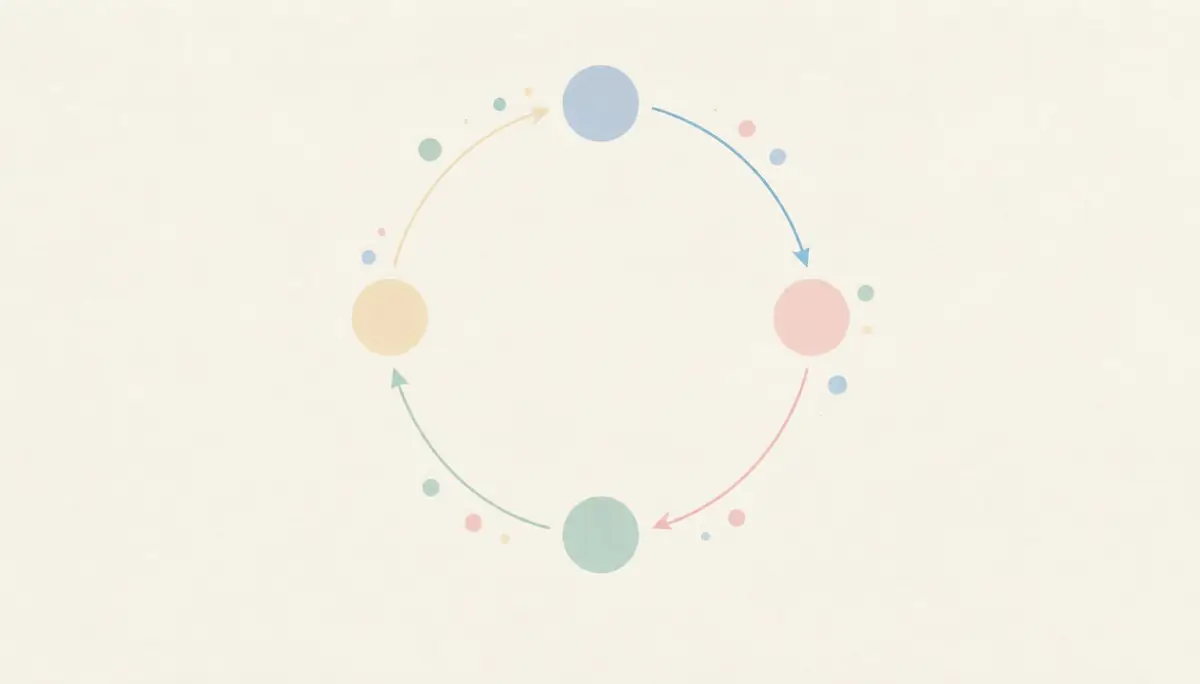
A growth loop is a system where every new user creates the input for the next one. Unlike a funnel, which ends at conversion, a loop feeds itself: what comes out goes back in. A user inviting another, user-generated content attracting searches or revenue reinvested in ads are all loops.

From funnel to loop
Reforge argued it in 2018: the AARRR funnel (acquisition, activation, retention, revenue, referral) describes stages but doesn't explain how growth compounds. A loop does, because it connects one stage's output to another's input. The question shifts from "how many come in?" to "how many new users does each user generate, and how fast?".
The 4 types of growth loop
- Viral: users invite others, or product usage is visible from outside (Dropbox, Calendly).
- Content: users or the company create content that attracts searches and new users (Canva, Pinterest).
- Paid: revenue from one customer is reinvested in ads to acquire the next.
- Sales: revenue funds sales reps who close new accounts.
The classic example: Dropbox
Its referral program gave extra storage to both inviter and invitee. They went from 100,000 users in September 2008 to 4 million in January 2010: 3,900% in 15 months. Referrals permanently lifted signups by 60% and reached 35% of daily signups.
3,900%
Dropbox growth in 15 months
+60%
permanent signup lift from referrals
35%
daily signups coming from referrals
Your take, in one click
Which loop drives most of your growth?
The incentive was the product itself (storage), which attracted users who valued exactly what Dropbox offered. We analyze this and four other cases in how Dropbox, Airbnb, Duolingo, Canva and Cursor grew.
How to measure a loop
Two metrics define a loop: the conversion rate of each cycle (how many new users each user generates) and cycle time (how long one full turn takes). A loop with modest conversion but a very short cycle can grow faster than one with high conversion and a slow cycle.
Where AI comes in
- Incentives: models that decide which reward to show each user based on their likelihood to invite.
- Timing: detecting the moment of highest satisfaction (right after a result) to ask for the invite.
- Content: generating useful pages at scale for the search loop, like programmatic SEO.
- Experimentation: testing variants continuously; companies like Notion, Figma and Atlassian use platforms like Statsig for this.
AI amplifies loops that already work; it doesn't create one where there's no value. Before automating, the product needs fit, as explained in growth strategies by stage.
How to start in 4 steps
- Draw your main loop: input, action, output and reinvestment.
- Measure each step's conversion and the time for one full cycle.
- Attack the slowest or worst-converting step first.
- Automate with AI only the step already validated.
Frequently asked questions
What is a growth loop?
A growth system where the output of one cycle (a new user, a piece of content, revenue) becomes the input of the next, so growth compounds.
What's the difference between a growth loop and a funnel?
A funnel describes linear stages ending at conversion. A loop connects the output to a new input, explaining how growth feeds itself.
What is the most famous growth loop example?
Dropbox's referral program, which gave free storage to inviter and invitee and helped grow from 100,000 to 4 million users in 15 months.