What is a referral program: example and how to create yours
What is a referral program and how to set one up for a small business. A referred customer is worth at least 16% more, according to a Wharton study. With an example, a template and mistakes to avoid.

By Rubén García · October 27, 2026 · 5 min
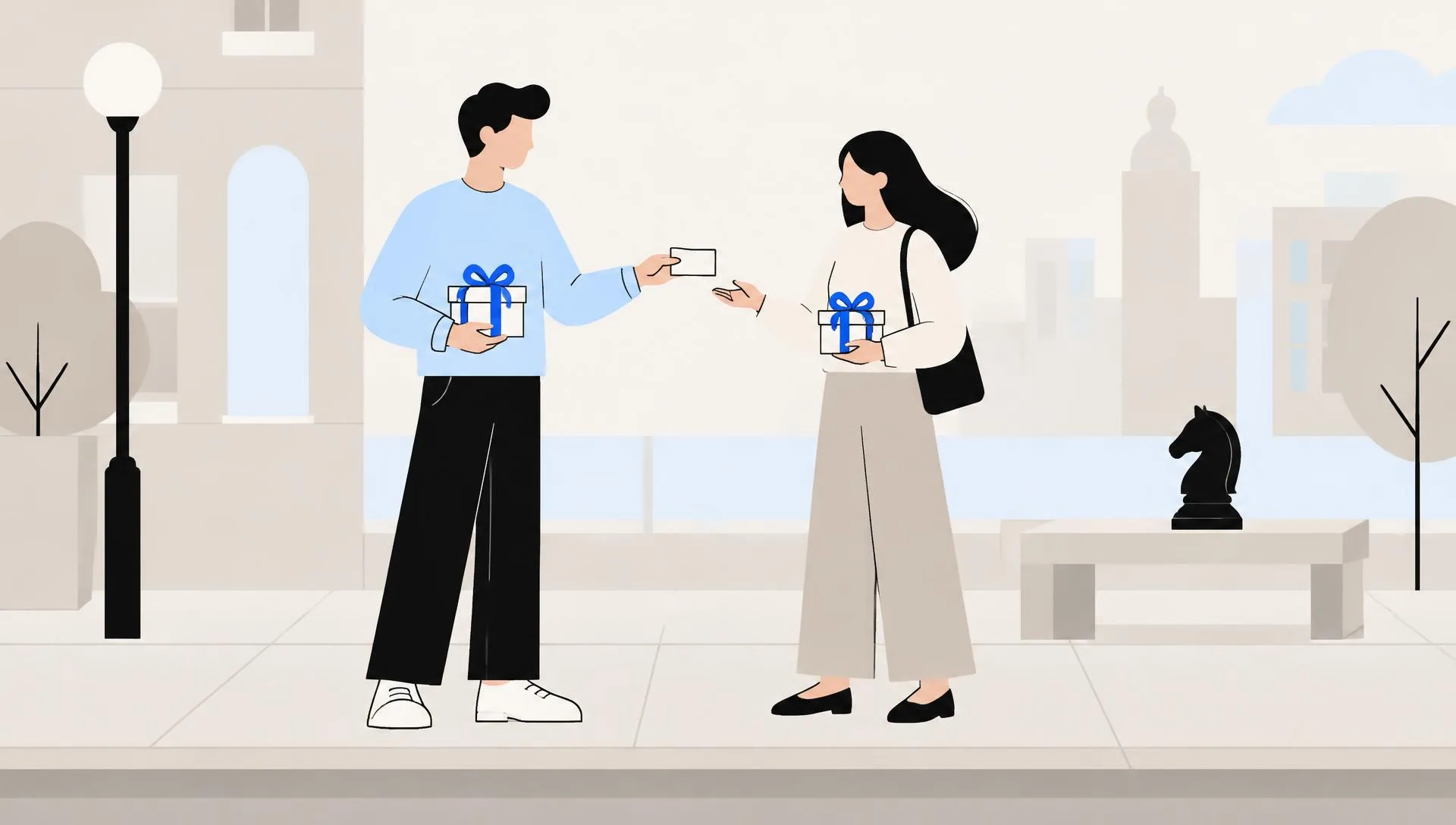
A referral program is a system that rewards your customers for bringing in other customers. It works because we trust people we know: according to Nielsen, 88% of people trust recommendations from people they know, almost 9 in 10. And those referred customers are worth more. A study in the Journal of Marketing put it at least 16% more.
88%
of people trust recommendations from people they know (Nielsen, 2021)
16%
higher value, at least, for customers who arrive through a referral (Journal of Marketing, 2011)
40,000
people surveyed in Nielsen's trust in advertising study (2021)
What is a referral program and how does it work?
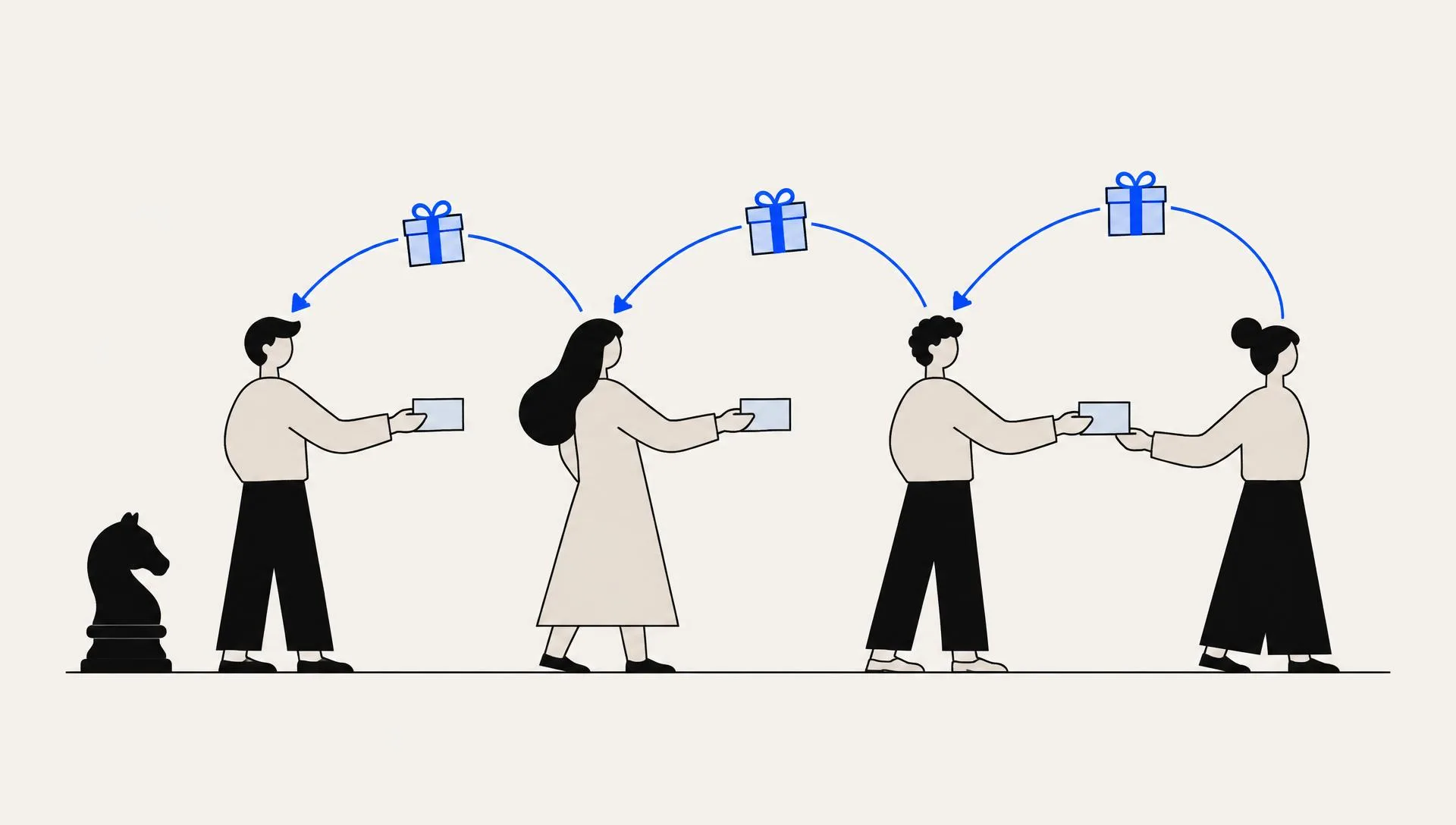
It has three parts: the person who invites, the person who arrives and a reward. The customer shares a link or a code. When a friend buys or signs up with it, the two of them get something.
Hypothetical example: an online coffee shop gives each customer a code. Whoever uses it gets €5 off their first order. Whoever shared it gets another €5 for their next purchase.
What it means: the customer acts as your salesperson and you only pay when it works. Why it matters: it's one of the few ways to grow that feeds itself, like automated growth loops.
Rule of thumb: reward the two of them, not just the one who invites.
Why are referred customers worth more?
Researchers Schmitt, Skiera and Van den Bulte followed about 10,000 customers of a German bank for almost three years. Those who arrived through a referral brought in more margin at first and stayed longer. On average, their lifetime value (what a customer brings in over the whole relationship) was at least 16% higher.
What it means: a customer who recommends you usually brings someone who fits your business. That's why they stay longer. What to do: track how many referred customers buy again in your store compared with the rest.
Rule of thumb: a referral program improves retention, not just new sales.
Source: Nielsen, 2021 Trust in Advertising Study (40,000 people).
Your take, in one click
What would make you recommend a brand to a friend?
Which reward works best?
The most effective reward is usually your own product: a free month, more storage or a discount on the next purchase. That way the reward also brings the customer back (editorial recommendation).
What to do: choose a reward that costs you less than what a new customer brings in. If a customer earns you €40 in profit, a €5 reward for each person pays off. Why: an oversized reward attracts people who only want the gift.
Rule of thumb: the best reward brings the customer closer, not further away.
The Garcai method: your referral program in 6 steps
You need one afternoon. Many online stores and email tools already include a referral or discount code option.
- Work out the average profit a new customer brings in. That's the ceiling for your reward.
- Choose a reward for the two of them, ideally your product or a discount on it.
- Decide when to ask: right after a good experience, like an on-time delivery or a positive review.
- Create a personal code or link for each customer so you know who brought whom.
- Write the terms in 3 lines: what you get, when and until when.
- Each month, track how many customers arrive through referrals and how many buy again. If the number doesn't grow, change the timing first and the reward second.
You can do it yourself: steps 1, 2, 3, 5 and 6. All you need is a spreadsheet and your sales data.
Ask your tech team, or whoever runs your online store, for step 4. Ready-to-send message: ‘I want to launch a referral program. I need a personal code per customer giving €5 off to the friend and €5 to the customer when the friend buys. Can our store do this?’
Common mistakes
- Asking for a referral in the welcome email, before the customer has tried anything.
- Rewarding only the person who invites: the friend has no reason to take the step.
- A reward so big it attracts people who never buy again.
- Long terms or small print: if they can't be understood in 10 seconds, nobody takes part.
- Emailing friends without their permission: in the EU, the GDPR (the European data protection law) requires consent.
A referral program turns your best customers into your best channel. See where it fits with our guide on what is AARRR, and how Dropbox and others used it in how tech startups grew. And remember: reward the two of them, not just the one who invites.
Frequently asked questions
What is a referral program?
It's a system that rewards your customers for bringing in other customers. Usually the person who invites and the person who arrives get a reward.
What reward should a referral program offer?
Your own product or a discount on it usually works best. The reward should cost you less than what a new customer brings in.
When should I ask a customer for a referral?
Right after a good experience, like an on-time delivery or a positive review. Never before they've tried your product.
Is a referral program legal in the EU?
Yes, but you must follow the GDPR. Don't send marketing emails to friends without their consent, and explain the terms clearly.